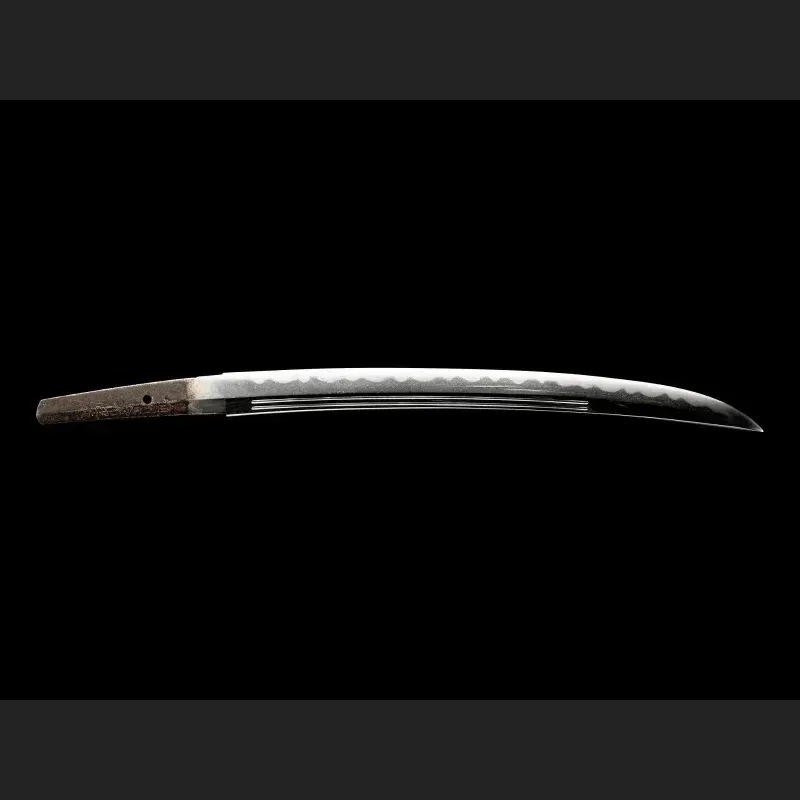
備前 Tradition
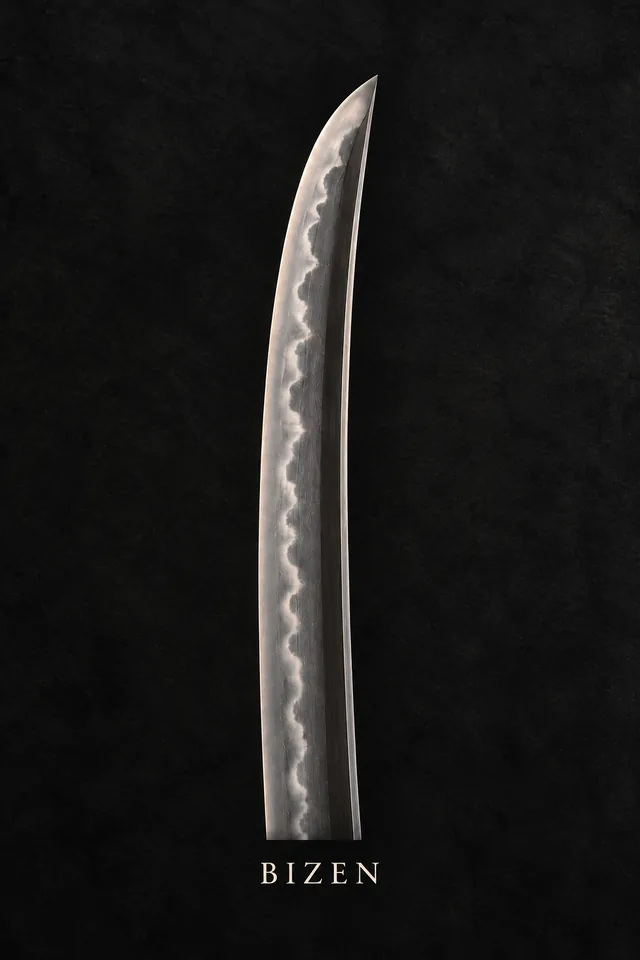
Bizen Province (modern Okayama Prefecture) is the single most productive sword-making region in Japanese history, responsible for more surviving nihonto than any other tradition. The defining traits run together. Bizen swords show a nioi-based hamon worked in chōji or gunome, a fine itame or mokume hada with utsuri, and an unbroken production line stretching from the mid-Heian period to the end of the Kotō era. No other school produced as many great smiths, or as many swords that remain in active collector circulation today.
History and lineage
Bizen swordmaking begins in the late Heian period with the Ko-Bizen smiths — Tomonari and Masatsune among the most cited — producing blades of tachi form with deep koshizori and a restrained elegance suited to mounted warfare. By the Kamakura period the school had expanded dramatically, with the Ichimonji group (centred on smiths signing with the single character “ichi”) producing the most celebrated work of the era: extravagant chōji hamon, vivid jihada with midare-utsuri, and a visual richness that has never been surpassed in nihonto. The Osafune smiths — Mitsutada, Nagamitsu, Kagemitsu, and Kanemitsu across successive generations from the mid-Kamakura through Nanbokuchō periods — represent the school’s long maturity. Production at Osafune continued through the Muromachi period (with Sue-Bizen work as the final phase) until the great flood of 1590 effectively destroyed the forge infrastructure and ended the Kotō tradition. Fujishiro’s Nihon Toko Jiten devotes more pages to Bizen smiths than to any other province.
Identifying characteristics
The defining hamon of Bizen work is nioi-based — the activity lives in the nioi-guchi rather than in hard nie granules — with chōji (clove-shaped projections) in Ko-Bizen and Ichimonji work, and gunome or notare-gunome in Osafune pieces. Ichimonji chōji is often described as “juka chōji” — layered, complex formations with ashi and yō that create remarkable visual depth. The jihada across the tradition tends toward itame with mokume, tight in Ko-Bizen and early Kamakura work, becoming somewhat broader in later Osafune pieces. The most diagnostic single feature of Bizen work is utsuri — a misty, shadow-like reflection of the hamon pattern visible in the ji — particularly midare-utsuri in Kamakura-period pieces and bō-utsuri (a straighter, band-like form) in later work. Ko-Bizen differs from Ichimonji principally in restrained elegance versus extravagance: Ko-Bizen hamon are quieter, the chōji less dramatic, the overall impression one of refinement rather than display. Osafune-period work shifts toward gunome and notare, with the jihada becoming more prominent and the utsuri sometimes fading in late Sue-Bizen examples.
Why this matters for collectors
Bizen is the market’s broadest category, which cuts both ways. Kamakura Ichimonji and Ko-Bizen tachi at museum-grade quality are among the most valuable objects in nihonto; accessible Sue-Bizen katana can be acquired for modest sums. The pitfall is over-attribution: the Bizen tradition is so well-known that many blades with a nioi-based hamon and some utsuri attract Bizen labels without rigorous kantei. Utsuri alone is not sufficient — its character, the jihada’s behaviour, and the hamon’s internal activity all need to cohere. NBTHK papers are strongly advisable for anything claimed as Ichimonji or named Osafune work.
If you’re hunting for a Bizen piece, we welcome enquiries. Many of the best examples never reach public listings.
Related guides: Kantei: attributing a Japanese sword · Periodisation of the Japanese sword