肥前 School
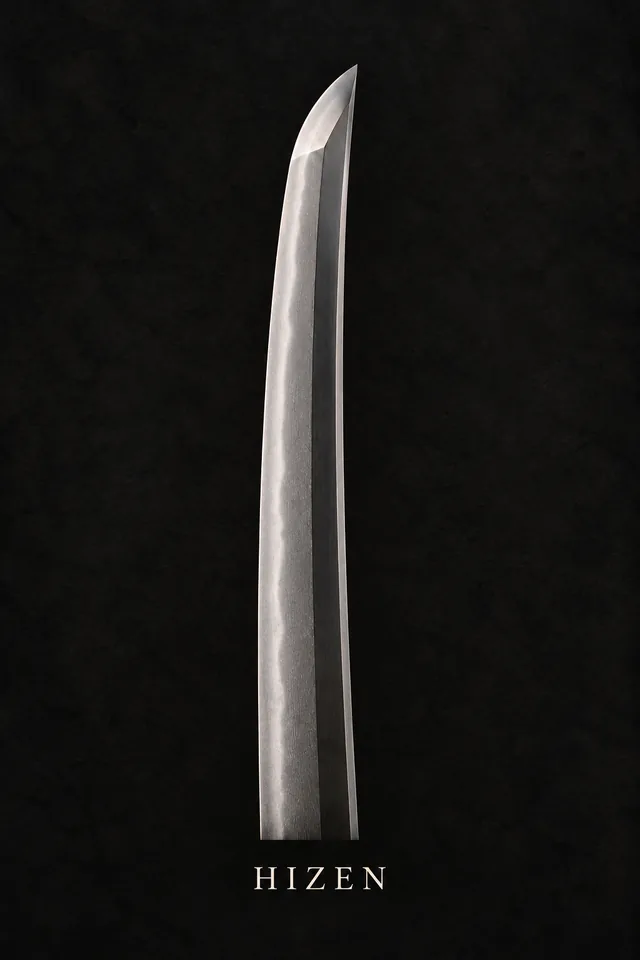
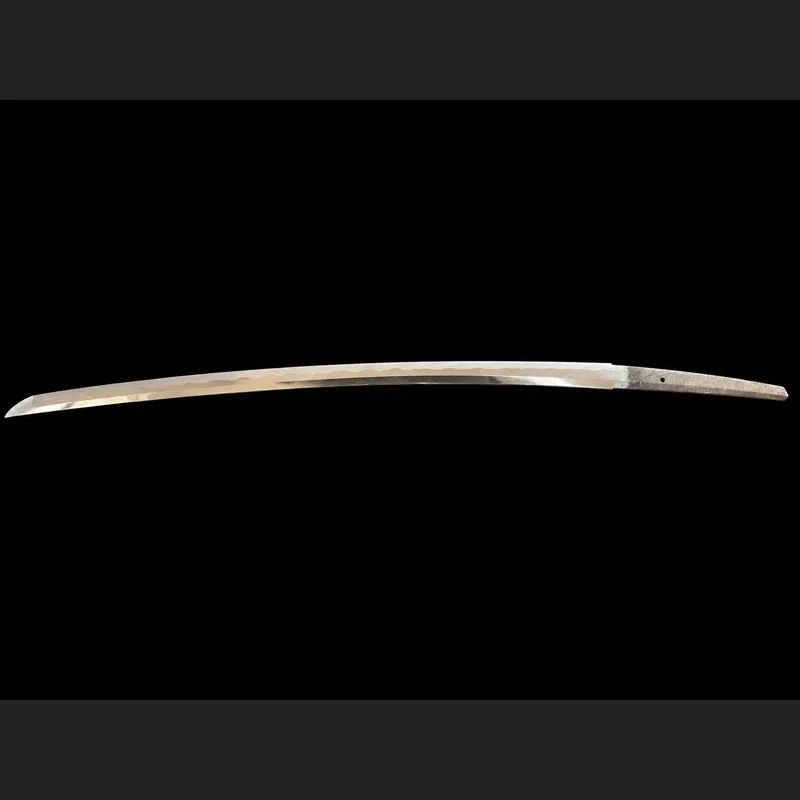
Hizen Province (modern Nagasaki and Saga Prefectures) produced the most consistently refined swords of the early Shintō period, and the Tadayoshi line that dominates that tradition is one of the best-documented smithing lineages in nihonto. Two qualities set the work apart. The jihada is uniquely fine and tight, “nukeme nashi” (flawless integration) in the classical description, and reads as a nearly infallible identifier. The hamon is restrained and elegant, reflecting the province’s distance from the martial turbulence of the mainland schools.
History and lineage
The school’s founder, Hashimoto Shinzaemon Tadayoshi I, was born in Hizen in 1572 and trained under Umetada Myōju in Kyoto before returning to establish his forge under the patronage of the Nabeshima domain lords. His work from roughly 1596 onward established the Hizen aesthetic: fine steel, controlled hamon, classical proportions. The name “Tadayoshi” was passed through successive generations — typically numbered I through IX, with associated smiths signing “Masahiro,” “Yukihiro,” and other names within the broader school — producing a remarkably consistent body of work across the entire Shintō and early Shinshintō periods. The school’s patron relationship with the Nabeshima clan provided stable workshop conditions unavailable to many contemporary smiths, and this stability is visible in the work: Hizen blades rarely show the experimental or uneven quality that characterises smiths working without consistent patronage. Fujishiro ranks Tadayoshi I among the great smiths of the Shintō period, and the subsequent generations maintained quality with impressive consistency into the nineteenth century.
Identifying characteristics
The defining characteristic of Hizen work is the jihada — described by NBTHK examiners and in classical texts as nukeme nashi (literally “without gaps or mis-strikes”): a perfectly integrated, fine ko-itame that reads as a smooth, almost lacquered surface under good light. This is not the active, rolling surface of Bizen itame or the masame-influenced grain of Yamato work; it is a still, deep surface of extraordinary technical discipline. The hamon across most Hizen work is suguha or ko-midare in nie with a bright, even nioi-guchi — well-defined, controlled, without the complex activities of Sōshū work. Later Tadayoshi generations and associated smiths occasionally worked in gunome or tōran (wave-form) hamon, but the school’s heart is in suguha. The sugata of Shintō-period Hizen work is a well-proportioned katana with moderate sori and a chu-kissaki — classical without archaism. Mei conventions are careful and regular; the Tadayoshi generation signature and the associated Nabeshima domain records make this one of the more traceable lineages in Shintō nihonto.
Why this matters for collectors
Hizen blades represent perhaps the best available combination of quality, accessibility, and documentation in the Shintō period market. The school’s prolific output means genuine examples in good polish appear regularly; the consistent style and well-understood lineage mean that kantei and attribution are more reliable here than in many other traditions. The primary risk is conflating generations: a later-generation Tadayoshi (IV–IX) or a school-affiliated smith like Masahiro is a respectable piece but not the same as a first-generation example. NBTHK papers will specify; attribution on the nakago alone, without supporting documentation, should be treated cautiously for the more valuable early generation claims.
If you’re hunting for a Hizen piece, we welcome enquiries. Many of the best examples never appear on public listings.