美濃 Tradition
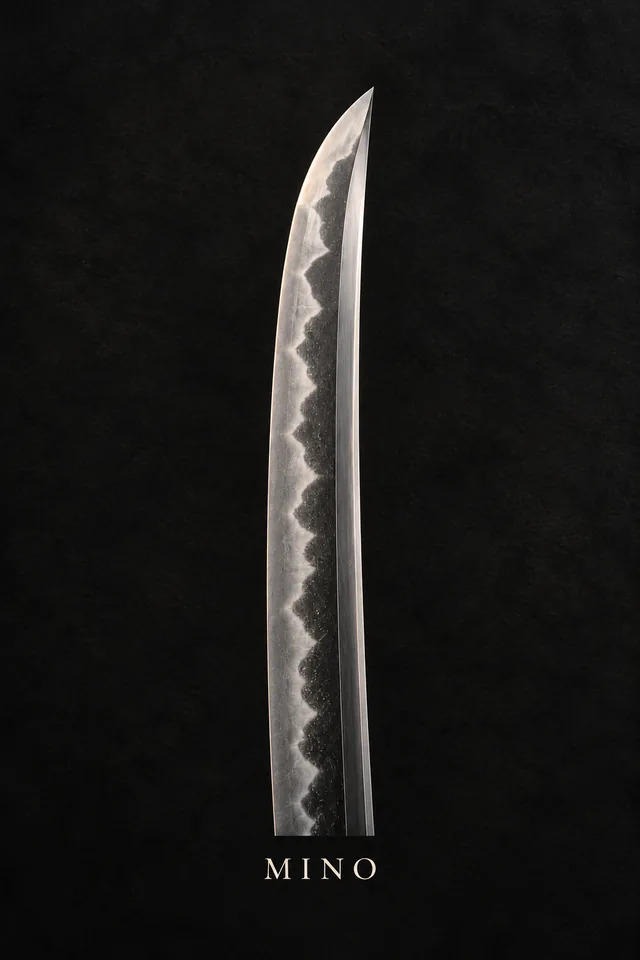
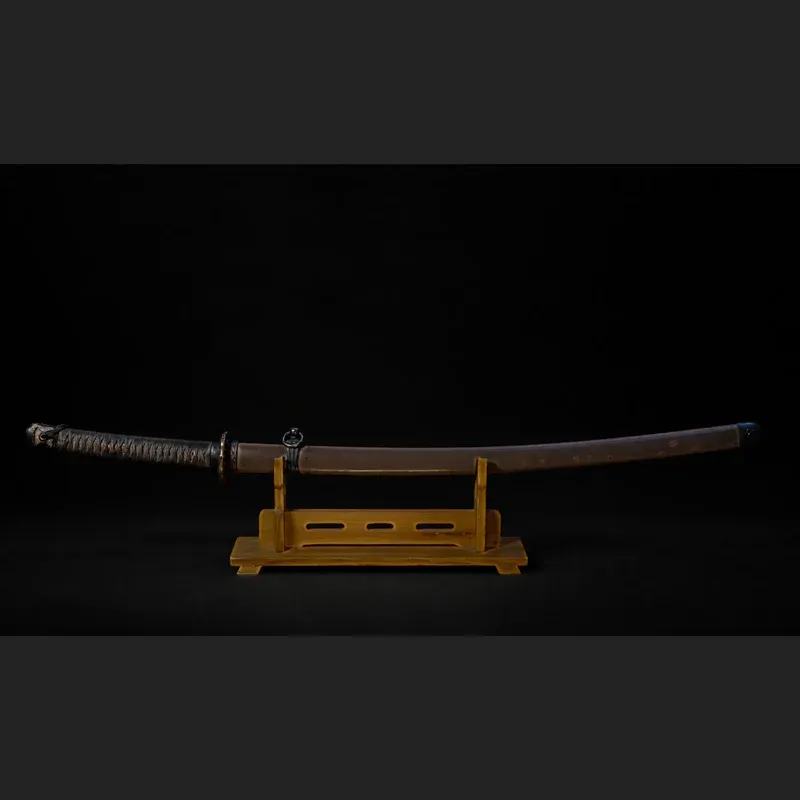
The Mino tradition, centred on the town of Seki in Mino Province (modern Gifu Prefecture), is the dominant sword-making tradition of the late Muromachi period and the principal supplier of blades to the armies of Japan’s century of civil war. Refinement was never the point. Mino was a tradition of production and martial competence, and it is worth remembering why: these blades were made in enormous quantities for soldiers rather than collectors. Sound examples remain undervalued today relative to their place in history and the fighting character they carry.
History and lineage
The Mino tradition grows from the migration of Yamato smiths — particularly from the Tegai and Shikkake schools — into Mino Province during the Nanbokuchō and early Muromachi periods. The key figure in the school’s formation is Shizu Kaneuji, a student of Masamune who transplanted Sōshū influence into Mino and established the technical foundation that later generations would develop. By the mid-Muromachi, Seki had become the most productive sword-making centre in Japan, with families of smiths working under shared names — Kanemoto (the most celebrated, particularly Kanemoto II, known as Magoroku), Kanesada (often called “No-Sada”), Kanefusa, and dozens of related names — constituting what scholars call Sue-Mino or Sue-Kotō Mino production. The tradition effectively ends with the Kotō period; by the Edo era, Seki had transitioned toward knife and tool production, a tradition it maintains to the present day.
Identifying characteristics
The three-pronged gunome hamon — often called “sanbon-sugi” (three-cedar-tree pattern) — is the most recognisable feature of Mino work and particularly of the Kanemoto line. This repeating, triple-humped gunome in nie is distinctive enough to serve as a school signature. Beyond sanbon-sugi, Mino hamon ranges from gunome-midare to notare-gunome, typically in nie with a relatively tight, bright nioi-guchi. The jihada is itame, often with a somewhat coarse quality — the grain is active but not refined. Masame influence from the Yamato-immigrant smiths appears as a tendency toward masame-nagare (masame running through the broader itame) in many pieces. Sugata in Sue-Mino katana tends toward a shallow, functional form with a moderate chu-kissaki — these are fighting blades, and the geometry reflects that purpose. Mei conventions in the Mino schools are highly variable; the shared use of “Kane-” prefixed names across multiple unrelated smiths and generations makes attribution challenging, and many Mino blades are correctly left as “attributed to Mino school” without further specification.
Why this matters for collectors
Mino offers something few other traditions do: genuine Kotō work at accessible prices, with plain martial character and a clear historical setting. A sound Kanemoto or Sue-Mino katana with legible hamon and appropriate nakago patina is excellent value. The caution is that the sheer volume of Mino production, together with the shared naming conventions, makes the tradition a natural home for misattributions. A blade described as “Kanemoto” without NBTHK papers should be judged on the quality of what you can see, not on the name.
If you’re hunting for a Mino piece, we welcome enquiries. Many of the best examples never appear on public listings.
Related guides: Kantei: attributing a Japanese sword · Periodisation of the Japanese sword