Gunto
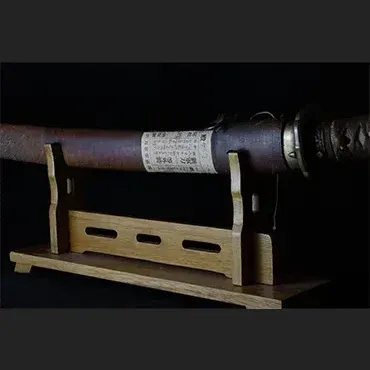
JB-1011 Gunto
Higo Dōtanuki (Dotanuki) Munehiro Shin Gunto
A family-heirloom Shin Guntō with a saya-label attribution to the Higo Dōtanuki line — the Kumamoto school of robust, battle-functional blades favoured by Katō Kiyomasa.
Gunto
JB-1034
£1,700
A Meiji-era Japanese Army officer's parade saber, Type 19 (1886) pattern, with a family mon on the backstrap and its bright nickel-plated dress scabbard still in excellent, untouched condition.
This is a Japanese Army officer’s parade saber, a kyū-guntō in its Type 19 pattern, introduced in 1886 and worn by officers on formal occasions from the late Meiji period into the early Shōwa years. Where a field officer’s sword went out under a leather combat cover, this one keeps the dress finish it was made for: a bright nickel-plated steel saya, the whole mounting a private purchase rather than standard-issue kit.
The tsuka is bound in gilt wire over black-lacquered rayskin (samegawa), under a pierced brass guard with a D-shaped knuckle-bow and a scrolled pommel, in the Western cavalry-sabre style the Army adopted for this pattern. The backstrap carries a nanako ground and, set into it, a silver mon: two crossed hawk feathers within a ring. A crest on a sword like this marks it as a named family’s own property rather than arsenal issue, though this particular design was carried by a good many unrelated families, so we can’t tie it to one in particular.
The fittings are in excellent order for their age: the gilding has an even patina, the wire binding is tight and complete, and the rayskin is undamaged. The scabbard plating is still bright throughout. The blade retains its old storage grease, said to have gone untouched since it came back from Japan.
It comes from a private UK collection. If you’d like exact measurements or closer photographs of any detail, please get in touch.
Age-verified delivery · UK / EU / international · Insured to declared value.
A family-heirloom Shin Guntō with a saya-label attribution to the Higo Dōtanuki line — the Kumamoto school of robust, battle-functional blades favoured by Katō Kiyomasa.
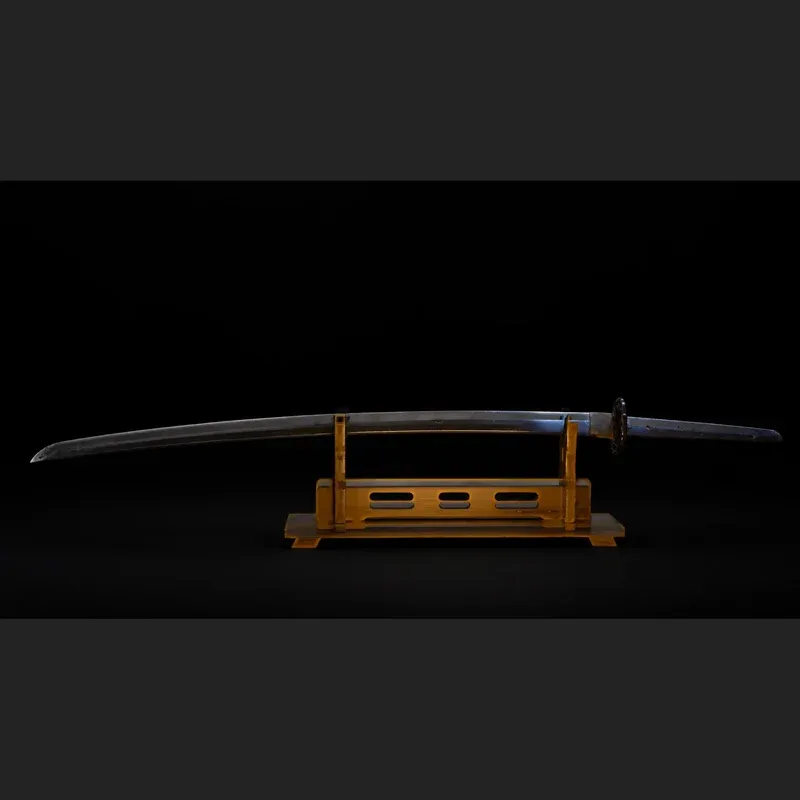
Spring 1941 Kōa Isshin Mantetsu, eto-dated Kanoto-Mi (辛巳) and signed Mantetsu saku kore — an earlier, more formally inscribed companion to our 1943 example.
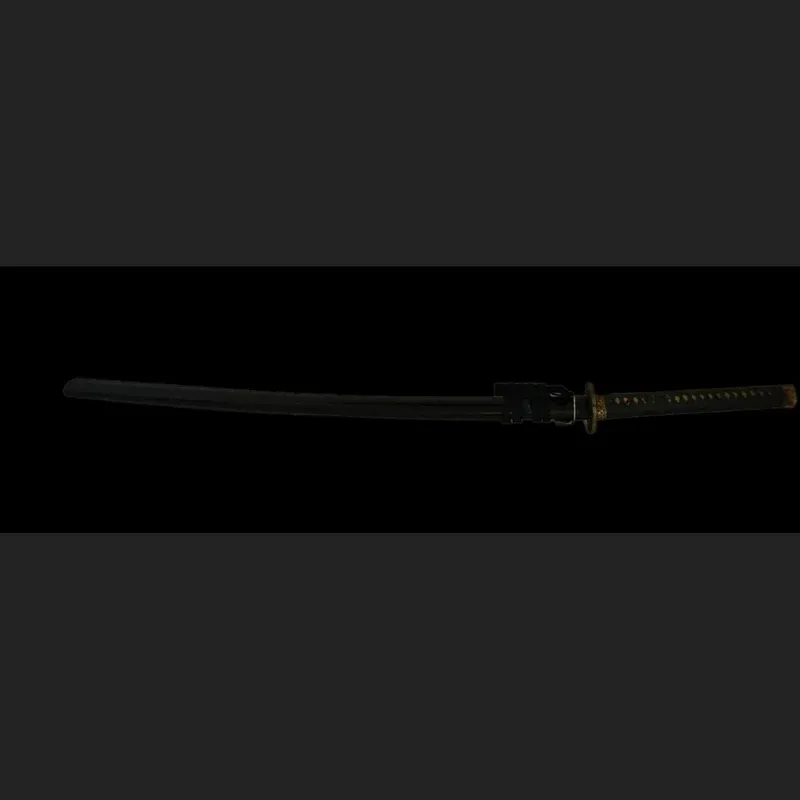
A Second World War Japanese sword carried by a gunzoku, a civilian official of the military: a Seki shōwatō signed Kuriki Kanemasa, in a cherry-blossom civilian mounting.
