Gunto
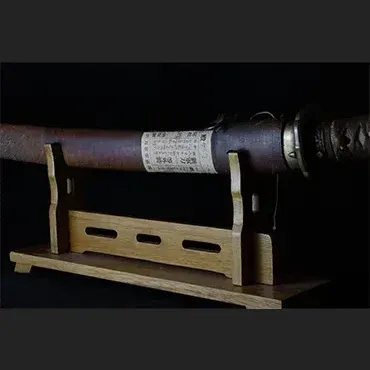
JB-1011 Gunto
Higo Dōtanuki (Dotanuki) Munehiro Shin Gunto
A family-heirloom Shin Guntō with a saya-label attribution to the Higo Dōtanuki line — the Kumamoto school of robust, battle-functional blades favoured by Katō Kiyomasa.
Gunto
JB-1020
£3,000
Spring 1941 Kōa Isshin Mantetsu, eto-dated Kanoto-Mi (辛巳) and signed Mantetsu saku kore — an earlier, more formally inscribed companion to our 1943 example.
興亜一心 満鐵作之 / 昭和十六年春 辛巳
Kōa Isshin Mantetsu saku kore / Shōwa Jūroku-nen Haru — Kanoto-Mi
"Asia, of One Spirit — Mantetsu made this" / Spring 1941, sexagenary year Kanoto-Mi (the yin-metal snake)
The South Manchuria Railway Company, Mantetsu (満鉄), ran one of the more distinctive sword operations of the war: a forge backed by the company’s own research institute, set up to supply officers with serviceable blades suited to the harsh Manchurian climate. Rather than tamahagane worked in the old way, Mantetsu blades were made from a proprietary modern steel and oil-quenched, a non-traditional process that produced a blade known for its durability and its resistance to corrosion and cracking in extreme cold, qualities prized in the field far more than decorative refinement. Most carry the inscription Kōa Isshin (興亜一心), “Asia, of One Spirit,” a production motto of the enterprise rather than the name of a single smith.
A defining feature of the type is the dated nakago. Mantetsu blades were commonly inscribed with the year, and often the season, of manufacture, which makes them unusually easy to place within the forge’s roughly 1938–1945 output. This piece records that date in a fuller, more formal form than usual. The signature side reads Kōa Isshin Mantetsu saku kore (興亜一心 満鐵作之), “Asia, of One Spirit — Mantetsu made this.” The date side gives Spring, Shōwa 16 (1941), and adds the sexagenary year in eto form: Kanoto-Mi (辛巳), the yin-metal snake. Most Mantetsu blades carry only the plain Shōwa year and season; the full eto designation seen here is the less common and more formal of the forge’s dating conventions.
It is offered as a companion to our existing Kōa Isshin Mantetsu (JB-1012, a Spring 1943 katana), and the two make an instructive pair. This blade is the earlier by two years, dated in the formal eto style rather than by plain year and serial, and signed Mantetsu saku kore (満鐵作之, “Mantetsu made this”) where JB-1012 is signed simply 興亜一心満鐵, without the saku kore. It is mounted in Shin Guntō koshirae with a leather combat cover, the blade in sound polish, the mounts worn from service. Principal measurements (nagasa, sori) available on request.
Age-verified delivery · UK / EU / international · Insured to declared value.
A family-heirloom Shin Guntō with a saya-label attribution to the Higo Dōtanuki line — the Kumamoto school of robust, battle-functional blades favoured by Katō Kiyomasa.
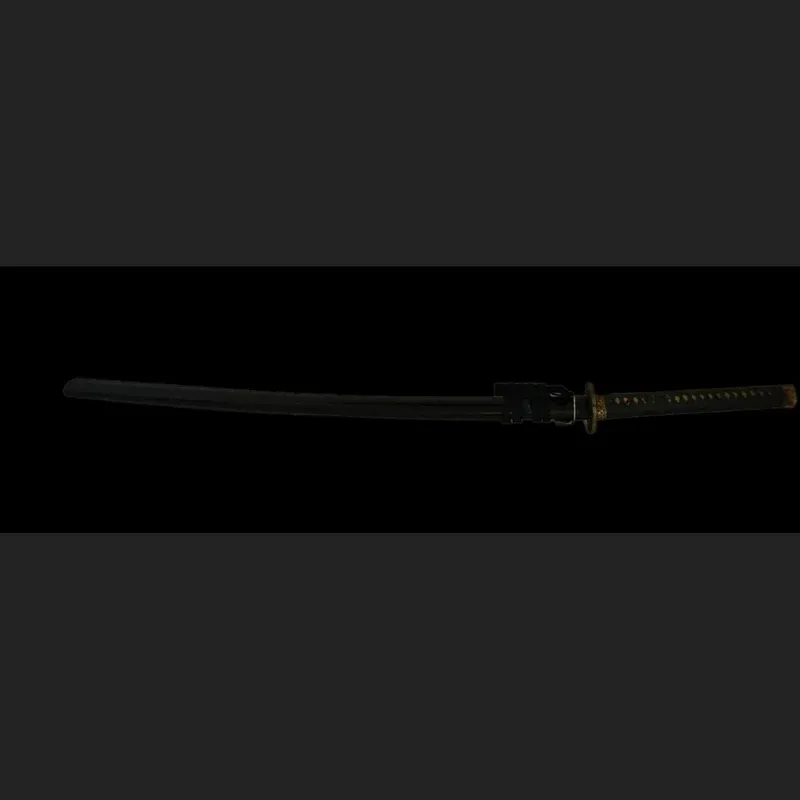
A Second World War Japanese sword carried by a gunzoku, a civilian official of the military: a Seki shōwatō signed Kuriki Kanemasa, in a cherry-blossom civilian mounting.
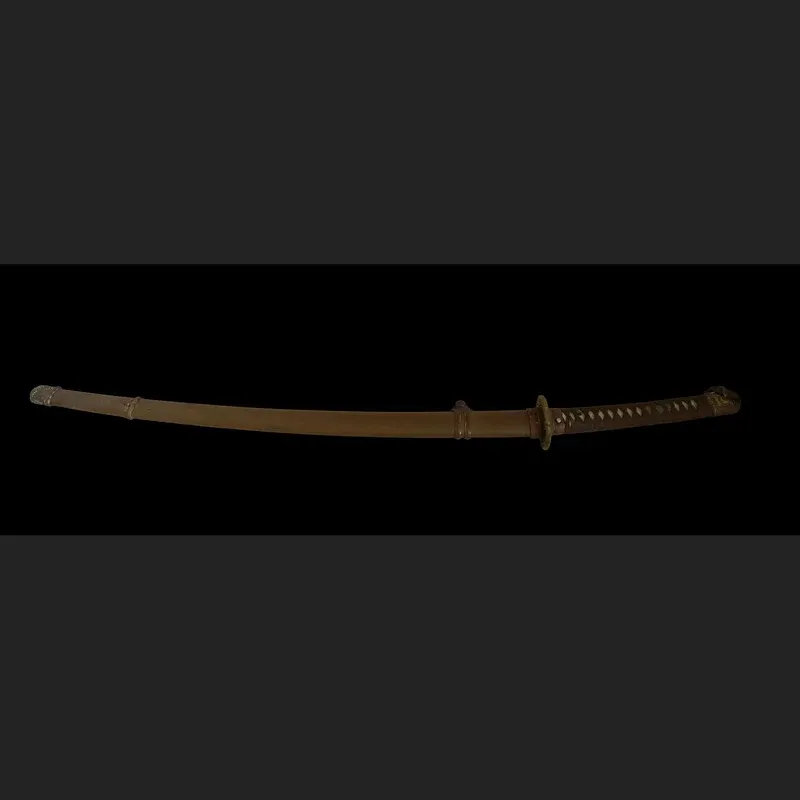
A Second World War bring-back: a Japanese blade signed Kanemichi, in its army officer's shin-guntō mounts with a leather field cover, accompanied by the original 1945 HQ Malaya Command war-trophy authorisation.
