Gunto
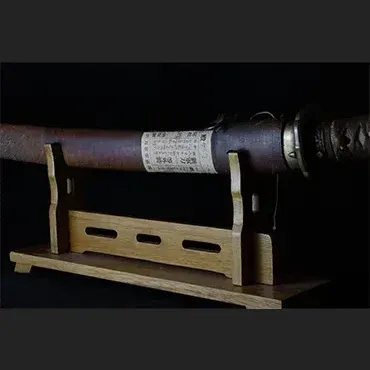
JB-1011 Gunto
Higo Dōtanuki (Dotanuki) Munehiro Shin Gunto
A family-heirloom Shin Guntō with a saya-label attribution to the Higo Dōtanuki line — the Kumamoto school of robust, battle-functional blades favoured by Katō Kiyomasa.
Gunto
JB-1033
£2,500
A Second World War bring-back: a Japanese blade signed Kanemichi, in its army officer's shin-guntō mounts with a leather field cover, accompanied by the original 1945 HQ Malaya Command war-trophy authorisation.
濃州兼道
Nōshū Kanemichi
Kanemichi of Mino province
This is a Second World War bring-back with its paperwork. It comes with the original HQ Malaya Command “Japanese Trophies” authorisation letter, typed and dated at Kuala Lumpur in November 1945, made out to Major E. J. Neal of the Royal Army Service Corps, authorising the bearer to hold a Japanese sword under the scheme that distributed surrendered war trophies to personnel who had served in the Malaya and Burma operations, signed by a Brigadier as Deputy Adjutant and Quartermaster General. Documentation of that kind, tying a blade to a named officer and a dated command order, is exactly what gives a captured sword its history.
The sword is dressed in Army officer’s shin-guntō mounts, with the cherry-blossom fittings of wartime service dress. The tsuka is bound in brown ito over rayskin, with cherry-blossom menuki beneath the wrap; the fuchi and pommel carry blossom with traces of gilding, and the tsuba is a cherry-blossom design over a stack of seppa. The saya is a wood core under a brown leather combat cover, with a hanger band for field carry, and the sword keeps its original leather tassel, the field sword-knot looped through the pommel.
Drawn, the blade is a shinogi-zukuri katana on a moderate curve, with a medium point and good body to the steel. Along the edge it shows a hamon of sanbonsugi gunome, the regular three-cedar pattern of peaks associated with the Mino and Kanemoto tradition that the Seki smiths worked in. On the tang it carries a Seki stamp, the mark of the wartime Seki forges, so this is a genuine Japanese sword of the war years. The boshi appears to turn back in the point.
The nakago, or tang, carries a four-character signature cut down the ridge in a flowing hand, now well worn under the patina, with two mekugi-ana. The same characters read on both faces, so the signature is original to the blade. It appears to read Nōshū Kanemichi, that is, Kanemichi of Mino province. A smith of that name, Kojima Kanemichi, worked at Seki through the war years and was well regarded there, and the Seki stamp and sanbonsugi hamon both sit comfortably with that reading. With a signature this worn we offer it as our reading rather than a certainty, and the price reflects the sword as it stands. The tang also carries painted characters from the surrender-and-collection process, a trophy inventory mark rather than a maker’s date.
It comes from a private UK collection and is offered with the trophy letter. If you would like the exact measurements, better images of the blade under raking light, or closer photographs of the tang, please get in touch.
Age-verified delivery · UK / EU / international · Insured to declared value.
A family-heirloom Shin Guntō with a saya-label attribution to the Higo Dōtanuki line — the Kumamoto school of robust, battle-functional blades favoured by Katō Kiyomasa.
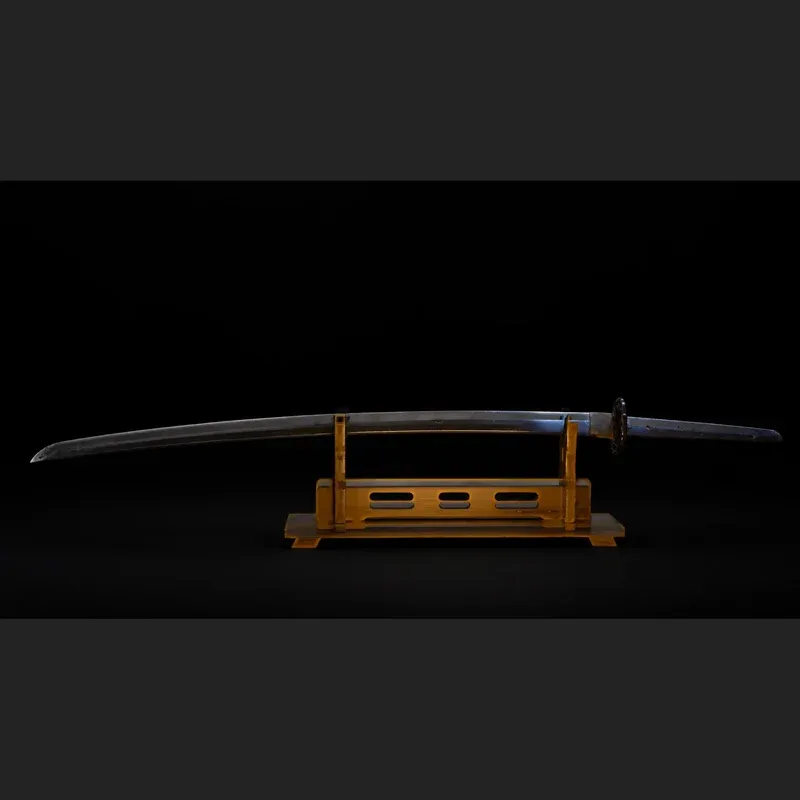
Spring 1941 Kōa Isshin Mantetsu, eto-dated Kanoto-Mi (辛巳) and signed Mantetsu saku kore — an earlier, more formally inscribed companion to our 1943 example.
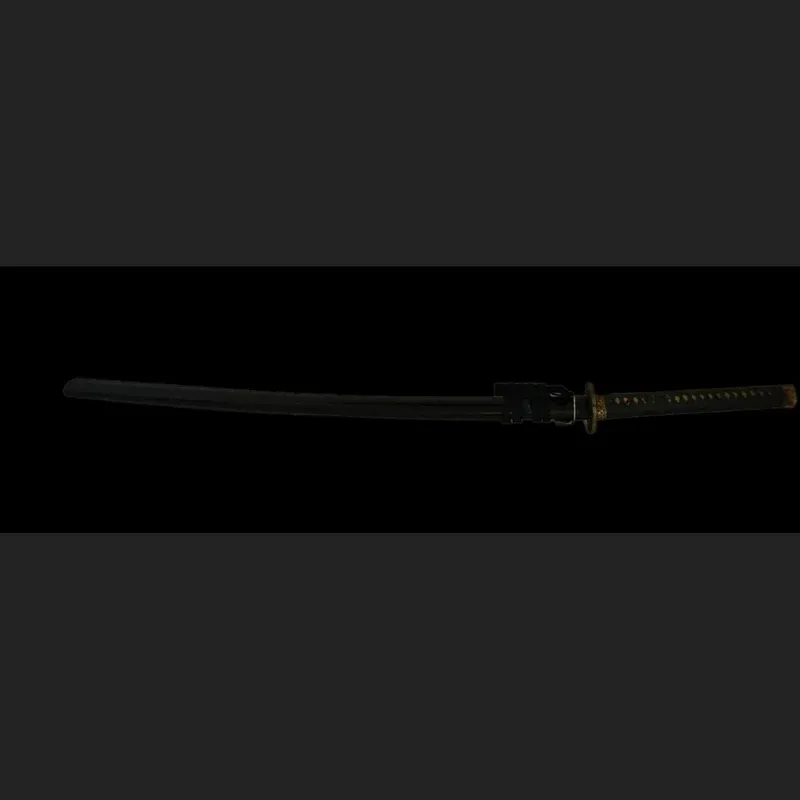
A Second World War Japanese sword carried by a gunzoku, a civilian official of the military: a Seki shōwatō signed Kuriki Kanemasa, in a cherry-blossom civilian mounting.
