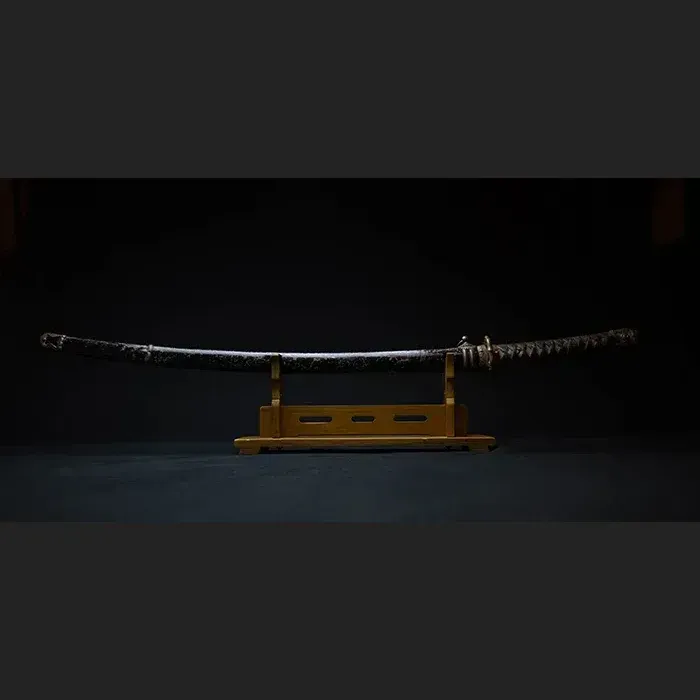
満鐵 School
Mantetsu swords are among the most historically specific gendaitō a collector can handle: military-issue blades produced at the forge established by the South Manchuria Railway Company in the early 1940s, where industrial history and martial tradition meet on a single tang. Authentic Mantetsu blades carry a distinctive mei convention and production record that makes attribution more verifiable than almost any other wartime forge. That same desirability has made them a target for false inscriptions.
History and lineage
The Manchurian Railway (South Manchuria Railway Company, Mantetsu) established a sword forge at Mukden (Fengtian) in the early 1940s as part of the broader wartime effort to supply officers with blades of genuine nihonto character rather than machine-stamped guntos. The forge operated under trained smiths working within the Shinshintō tradition, producing blades during roughly 1941–1945. The most celebrated name associated with the forge is Koa Isshin — a production designation rather than a single smith, meaning approximately “Asia united in one heart.” Blades bearing this designation were produced in numbered series, which is why surviving examples often carry both a production stamp and a date inscription. The forge closed with the Soviet invasion of Manchuria in August 1945, giving the production window a hard historical boundary that aids dating.
Identifying characteristics
Authentic Koa Isshin Mantetsu blades are typically katana in sugata, with a moderate shinogi-zukuri form appropriate to officer use. The jihada tends toward a tight, somewhat undifferentiated ko-itame, reflecting the forge’s industrial discipline rather than individualistic hand production. The hamon is commonly a controlled notare or gunome-notare in nie, serviceable and consistent rather than showy. The nakago is the critical area for attribution: genuine examples carry the Koa Isshin stamp (often a stylised character block), a spring or autumn seasonal designation, and a production number — in the case of HI series blades, the prefix indicates a specific production batch. The steel itself is often described as somewhat darker in ji than typical tamahagane work, reflecting the metallurgical inputs available in Manchuria.
Why this matters for collectors
Mantetsu blades fill a precise niche: late gendaitō with documented provenance, tied to a specific forge and a dateable production window. Good examples in sound polish with legible mei command genuine collector interest. The principal pitfall is false stamping, since the Koa Isshin mark has been applied to unrelated wartime blades. Cross-reference the production number against the seasonal designation and examine the nakago for consistent aging, treating any example without a plausible provenance chain with caution. NBTHK papers, where obtainable, are the clearest resolution.
Related guides: WW2 Japanese sword buyer’s guide · Periodisation of the Japanese sword