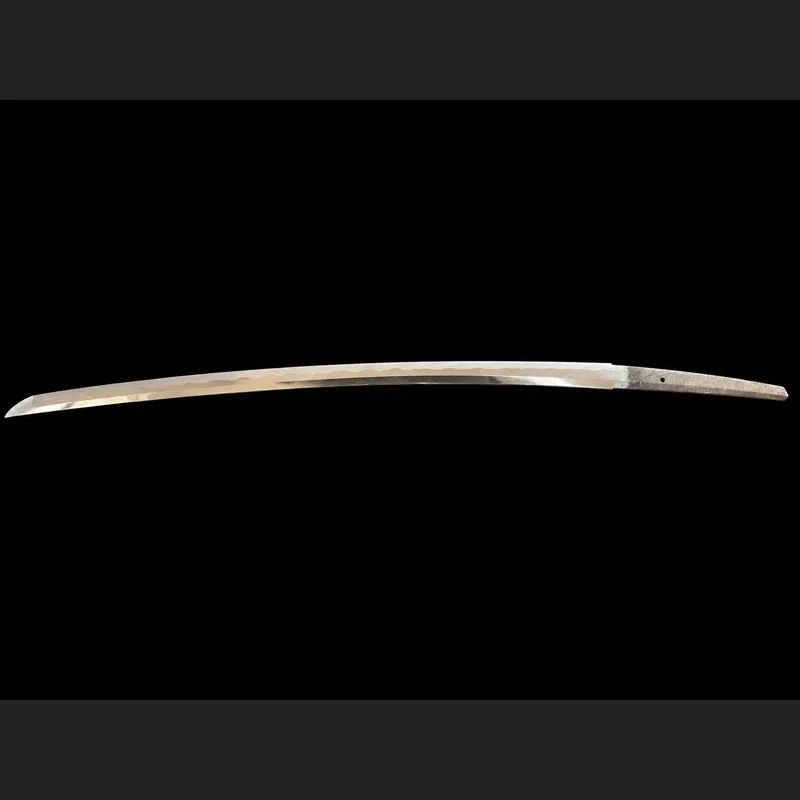
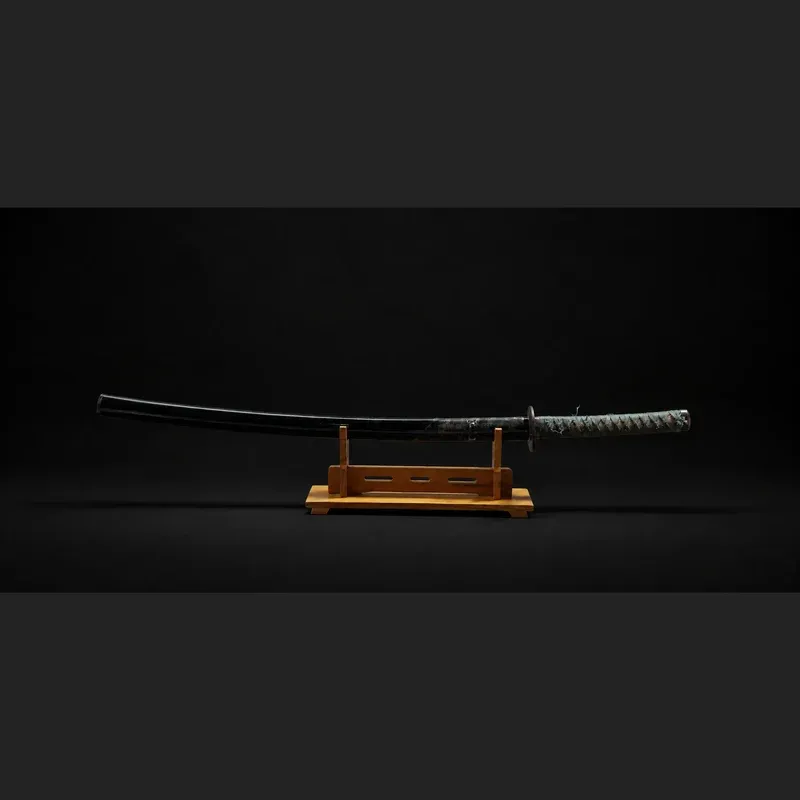
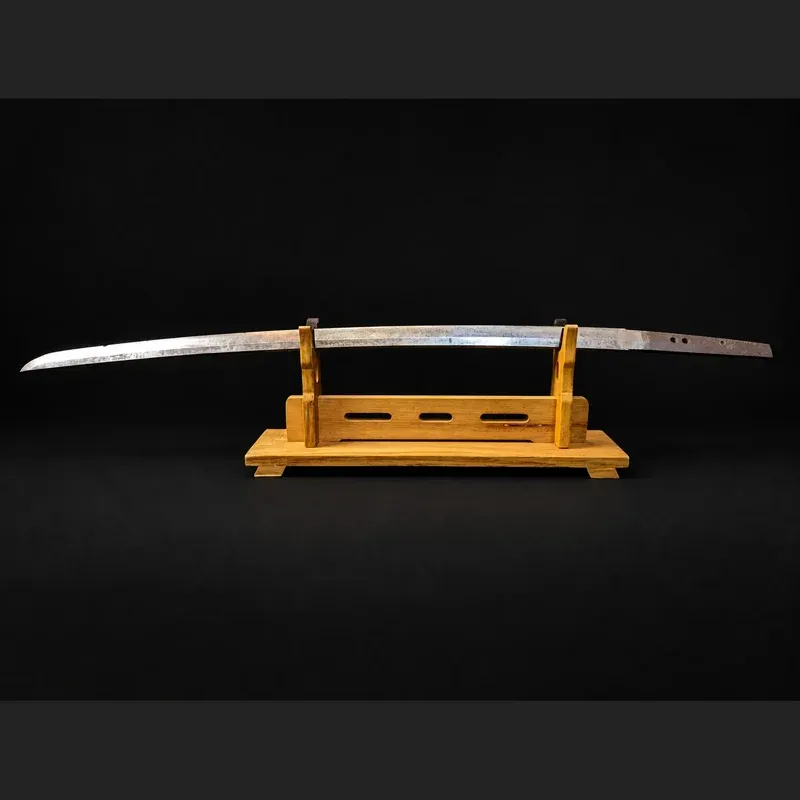
Spring 1943 Koa Isshin Mantetsu (serial HI 624) — among the last of the recorded 1943 Mantetsu blades, with the muji-hada and suguha hamon that define the type.
The Koa Isshin Mantetsu series, “Asia, of One Spirit,” was produced at the South Manchuria Railway’s Anshan forge from a proprietary modern steel rather than tamahagane, designed to deliver a battlefield-ready katana with uniform properties across thousands of blades. Mantetsu construction is identified at a glance by its almost grainless muji-hada and an austere suguha hamon, the decorative detail deliberately suppressed in favour of structural reliability.
This example carries the cyclical-date mei Shōwa Jūhachi-nen Haru (Spring 1943) with the kana serial HI 624, placing it among the last recorded Koa Isshin blades of 1943. Mantetsu output declined sharply through 1944–45 as Manchurian production was disrupted, and surviving 1943 examples, particularly late-1943 ones with intact Shin Guntō koshirae, are increasingly sought after by collectors in Japan, the UK and the US.
Age-verified delivery · UK / EU / international · Insured to declared value.